Which document ends more Mililani townhouse purchases: the appraisal, or the association's master insurance certificate?
On Oahu in 2026, it is the certificate. Most local lenders will not write a first mortgage on a unit in a building whose master policy carries less than 100 percent replacement cost coverage. American Savings Bank's Alan Fentriss has said plainly that the bank does not extend loans on condo buildings failing that standard, and Sue Savio of Insurance Associates estimated in 2024 that roughly 400 Hawaii buildings were already carrying less than full replacement coverage. A pre-approved buyer with clean credit and 10 percent down can sail through the price negotiation, then discover in the middle of escrow that the financing pool for that specific address has narrowed to cash and large down payments. That is the friction that decides Mililani townhouse deals, and it has nothing to do with the price you agreed on.
Which means the first number that matters in Mililani is not the price gap between a house and a townhouse. It is the fee sheet, and the documents behind it.
The paperwork that outranks the purchase price
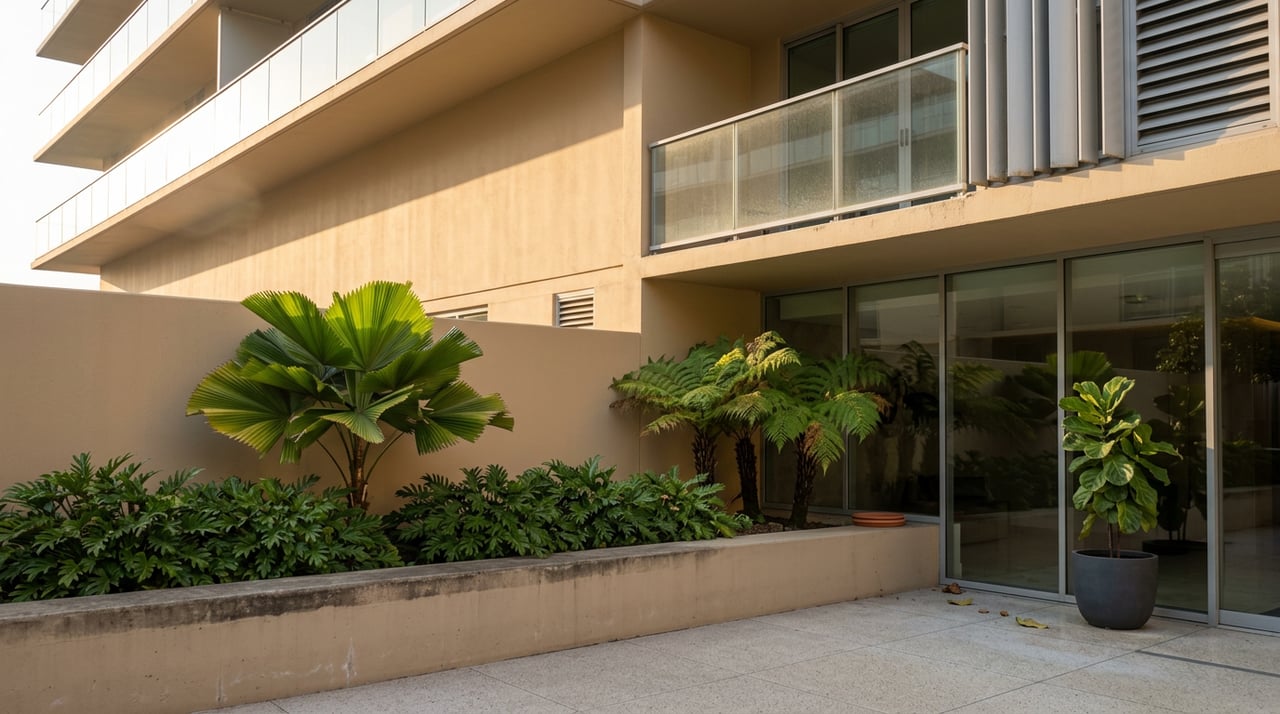
Every attached home in Mililani sits inside its own financial entity. Mililani Terrace on Lanikuhana Avenue, managed by Touchstone Properties, is a different balance sheet from the townhouse complex two streets over, with its own reserve study, its own insurer, and its own renewal history. The Mililani address they share tells you nothing about either one.
So before the inspection contingency, pull these four things and read them in this order:
- The master insurance certificate, specifically whether coverage equals 100 percent of replacement cost. This is the item that determines who can finance the unit at all.
- The reserve study and the current funding percentage, which tells you whether the next big project gets paid from savings or from your checkbook.
- Board meeting minutes for the past year, where re-pipe discussions, spalling reports, and proposed fee increases appear months before they appear on a listing sheet.
- The record of special assessments, both recent and pending.
The Hawaii Department of Commerce and Consumer Affairs published a condo insurance FAQ in January 2026 that explains why item three matters so much: buildings from the 1970s and 1980s are now past the useful life of their pipes, windows, decks, and railings all at once, and replacement costs today routinely exceed what the reserve study estimated. A Honolulu contractor that works with association boards reported in June 2026 that insurers are now making full copper re-pipes and hurricane-rated window replacements a condition of policy renewal, which converts a five-year capital plan into an immediate one. The same firm notes that a Honolulu Department of Planning and Permitting bulletin issued in 2026 for buildings over 40 years old can add four to six months to permitting alone.
None of this appears in a median price. All of it appears in your monthly payment.
Two Mililani markets, pointing in opposite directions
Once you accept that the fee sheet is doing the work, the second thing to understand is that Mililani is not one market. It is two, and as of mid-2026 they are moving in opposite directions.
Here is the comparison, using trailing twelve-month neighborhood figures through June 2026 drawn from Honolulu Board of REALTORS MLS data, set against the islandwide June 2026 month:
| Segment | Median price | Median days on market | Sold above asking | Months of supply | Active listings |
|---|---|---|---|---|---|
| Mililani single-family (12 mo. through June 2026) | $1,095,000 | 16 | 39.3% | 1.9 | 24 |
| Mililani townhouse and condo (12 mo. through June 2026) | $518,000 | 32 | 27.0% | 4.7 | 104 |
| Oahu single-family (June 2026) | $1,262,500 | 14 | 35.3% | 3.4 | n/a |
| Oahu condo (June 2026) | $528,000 | 37 | 18.5% | 7.3 | n/a |
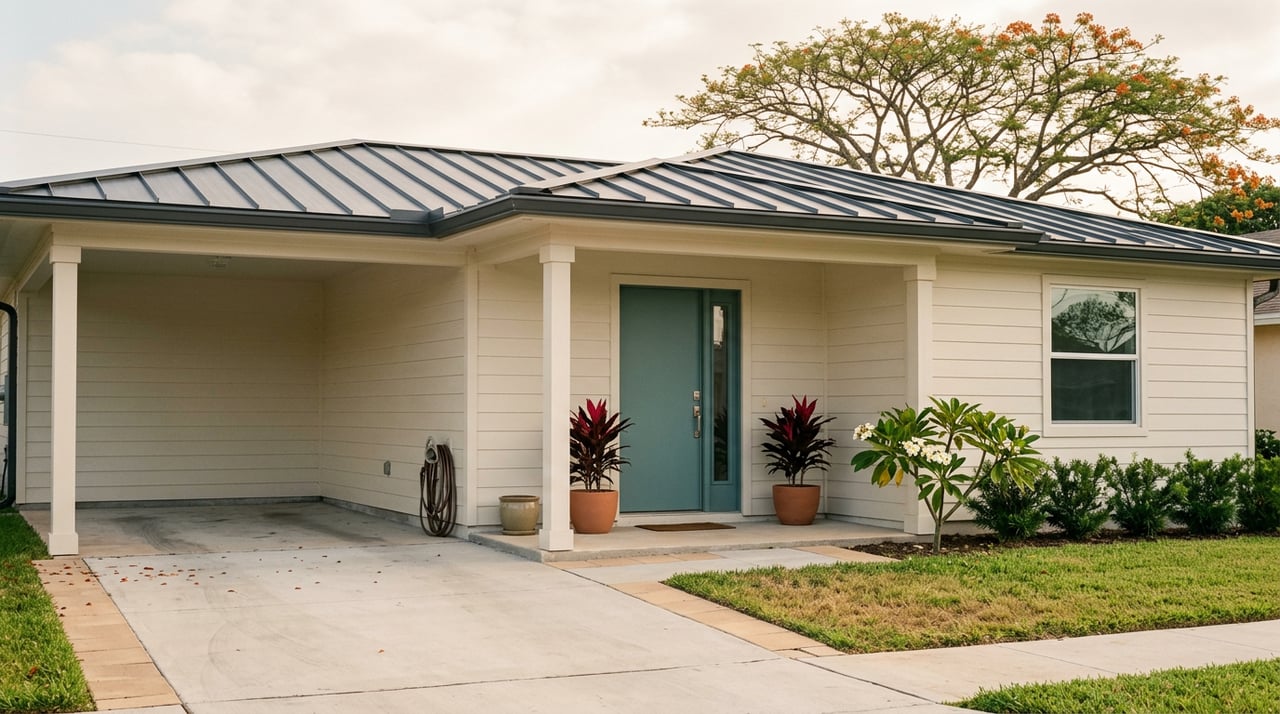
Read the top row against the third. Mililani's detached-house market is tighter and more competitive than Oahu's overall: 1.9 months of supply against 3.4, and nearly four in ten sales closing above asking against three and a half in ten islandwide. Twenty-four active listings across the entire community is not a shopping list. It is a two-week decision window, and at the end of 2025 the count was down to twelve, the tightest single-family market on the island at that moment.
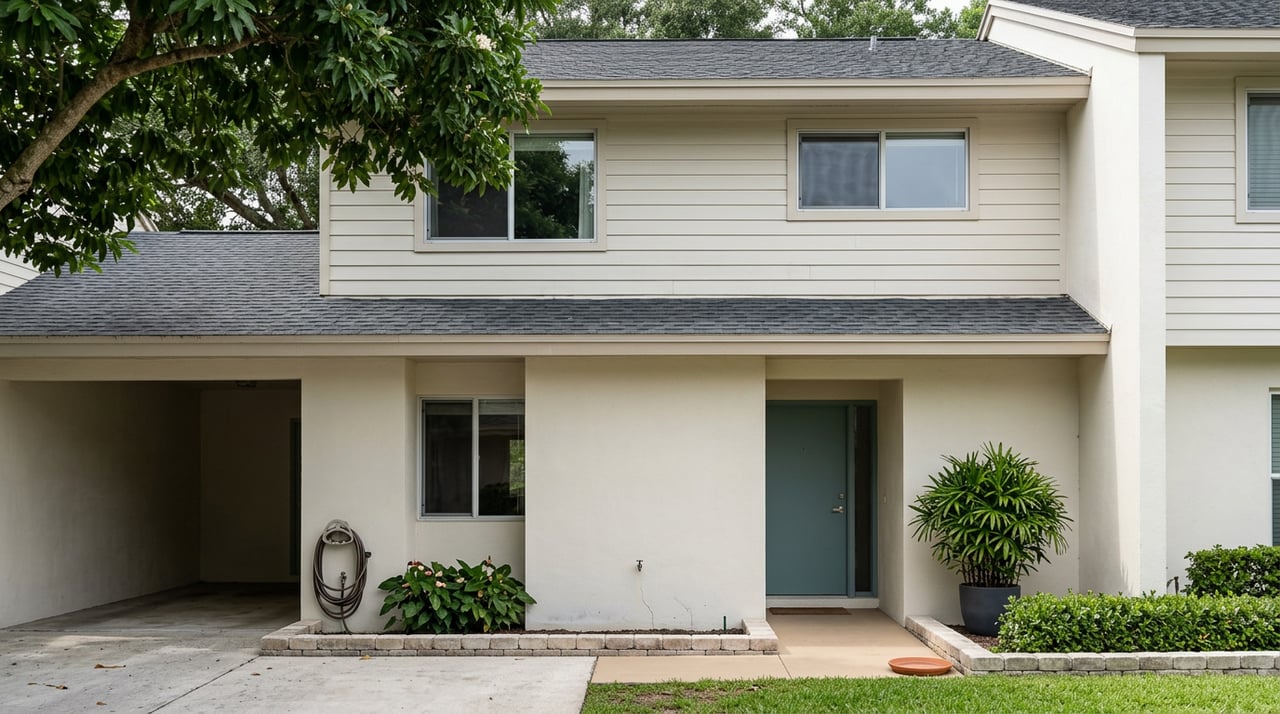
Now read the second row against the fourth. Mililani's attached homes carry 4.7 months of supply where the island carries 7.3, and 27 percent of them sold above asking where the islandwide condo figure was 18.5 percent. Mililani townhouses are among the more competitive attached-home submarkets on Oahu even while offering their buyers four times the selection that house buyers get.
One more line from that table deserves attention: 267 attached-home sales against 150 house sales. Roughly two of every three Mililani closings is a townhouse or condo. That is why the single blended "Mililani median" you see on national listing sites lands in the five hundreds. It is not measuring your house search. It is measuring a different segment that happens to share a zip code.
The fee that follows you either way
Here is the part most comparisons miss entirely. In Mililani, association cost is not a townhouse penalty. It is a floor.
Every Mililani Town Association homeowner pays a quarterly assessment, set at $165 effective April 1, 2025 and collected under Article VI, Section 6.02 of the Mililani Town declaration. That is about $55 a month, and it applies to a detached house on a fee simple lot exactly as it applies to a two-bedroom townhouse. MTA counts roughly 15,800 homeowners and operates seven recreation centers with it, including the Rec 1 pool that reopened on Saturday, July 25, 2026 after repairs. The association publishes the assessment schedule and payment terms directly.
Buy attached, and you stack an AOAO maintenance fee on top of that floor. Active Mililani townhouse listings have carried monthly fees in the range of roughly $544, $925, and $1,018, depending on the complex, its age, and what it covers. For islandwide context, an analysis of active Oahu listings in February 2026 found a median advertised HOA fee of $882 per month, with older buildings carrying deferred maintenance running higher once assessments are added.
Two fee structures, one community. That distinction is the whole decision.
What the $577,000 gap actually shrinks to
Do the arithmetic rather than trusting the headline.
The medians say the gap between a Mililani house and a Mililani townhouse is $1,095,000 minus $518,000, or about $577,000. The MTA assessment cancels out of that comparison because both sides pay it. The AOAO fee does not.
Run the fee at whatever rate your lender quotes you. At 6.5 percent on a 30-year amortization, $900 a month of maintenance fee occupies roughly the same monthly space as about $142,000 of additional loan principal. On that basis, a $577,000 purchase-price gap behaves more like a gap in the mid-$400,000s once the fee is treated as what it functionally is: a payment you cannot refinance, prepay, or negotiate away.
The medians overstate the gap between Mililani's two markets. The fee sheet understates how fast that gap can move.
That is not a case for buying the house instead. A well-funded association with recent plumbing work and a fully insured master policy can be the better buy at a higher fee than a cheap fee attached to a building heading toward an assessment. It is a case for pricing the fee as principal, and for asking what that fee is actually funding before you decide whether it is expensive.
Why the fee sheet keeps moving
The reason this math is unstable in 2026 is insurance repricing, and the effect reaches both sides of Mililani.
Hawaii Business Magazine reported in July 2025 that many Hawaii associations absorbed master policy premium increases of 300 to 600 percent over roughly two years, with the hardest-hit buildings being those behind on plumbing and electrical replacement, and that a typical Hawaii association fee had reached around $1,000 a month, or roughly $1.25 to $1.75 per square foot. The state has responded: Act 296 in the 2025 session expanded the Hawaii Property Insurance Association's role and reactivated the Hawaii Hurricane Relief Fund for associations that private carriers will not cover, with a condo repair loan program following in 2026.
Mililani has already seen the mechanism in local form. KHON2 reported in 2024 that the 238-unit Gardens at Launani Valley notified owners of a 325 percent insurance increase totaling more than $570,000, which worked out to roughly $2,700 per owner on top of a $600 monthly fee, with a plumbing upgrade charge earlier that same year.
The detached side is not exempt. MTA's own 2025 letter explaining its assessment increase cited inflation, large property insurance increases, and successive minimum wage increases including one on January 1, 2026. The insurance market is repricing the community association itself, not only the condo buildings inside it.
What each side of Mililani asks of you
The two markets in that table reward opposite behavior, and knowing which one you are in is most of the strategy.
- Shopping detached in Mililani: with 24 active listings, 16 days to contract, and four in ten sales going above asking, your leverage is readiness, not patience. Financing lined up, subareas narrowed, and a willingness to tour the week a listing appears. Price the MTA assessment into your monthly figure from the start.
- Shopping attached in Mililani: you have 104 listings and 4.7 months of supply, so you can take the time the house market denies you. Spend it on documents rather than on waiting for a broader price break, because 27 percent of these sales still closed above asking. The listings sitting longest are where the negotiating room is, and the reason a unit is sitting is usually written in the association's minutes.
- Selling either one: a house seller is competing against two dozen listings. A townhouse seller is competing against a hundred, and against the buyer's read of the fee sheet. Getting the master insurance certificate, reserve study, and recent minutes in order before listing removes the single most common cause of a mid-escrow collapse.
Compare that against neighboring markets before you commit. The same trailing twelve-month data through June 2026 put the Pearl City and Aiea condo median at $420,000 with 4.7 months of supply, and Waipahu's attached homes carry their own fee and supply profile. If your search is driven by monthly carry rather than purchase price, the Pearl City and Waipahu fee structures deserve the same audit you give Mililani.
FAQ
Does the Mililani Town Association assessment apply to single-family houses, or only townhouses? Both. MTA homeowners pay the quarterly assessment, set at $165 effective April 1, 2025, whether the property is a detached house or an attached home. Attached homes add a separate AOAO maintenance fee on top of it.
Can I finance a Mililani townhouse in a building that is not fully insured? Sometimes, and rarely on ordinary terms. Most large local banks require 100 percent replacement cost master coverage. Some credit unions have looked at underinsured buildings case by case at a premium. Confirm the master policy status before you write the offer, not after inspection.
Are Mililani townhouses a buyer's market right now? More of one than Mililani houses, less of one than Oahu overall. In the twelve months through June 2026, Mililani attached homes carried 4.7 months of supply against 7.3 months islandwide, and more than a quarter still closed above asking.
Where do I find the fee number for a specific complex? The listing sheet shows the current fee. The reserve study, the master policy, and the board minutes show whether that number is durable. Those three documents are the ones worth reading twice.
If you are weighing Mililani's two markets against each other, the useful conversation is not about which median is lower. It is about what your monthly figure buys on each side, what the association behind it has funded, and where your money goes further across Central Oahu. Start with a straight read of your own numbers through Freddie D. Cantorna, or request a home valuation if you already own here and want to know what your equity supports. Let's Connect.